Your Gala is Over. Now What?

Your Gala is Over. Now What?
The room is finally quiet.
The doors close behind the last guests.
The buzz in the air settles.
At last, you and your team can rest.
The collective feeling is usually some combination of relief and exhaustion, and rightfully so—you’ve worked hard. But, if your team treats the end of the night as the end of the gala, you are leaving money and momentum on the table.
The most successful nonprofits understand something that many do not:
The gala is not the finish line.
It is the starting gun.
What happens in the weeks immediately after your event often matters more than the event itself.
Your preparation for your gala is important, but it’s not everything. The organizations that grow their gala year after year are rarely the ones with the best décor, the tastiest hors d’oeuvres, or the cleverest theme. They are the ones who know how to capitalize on the momentum a gala can spark.

Start With Gratitude
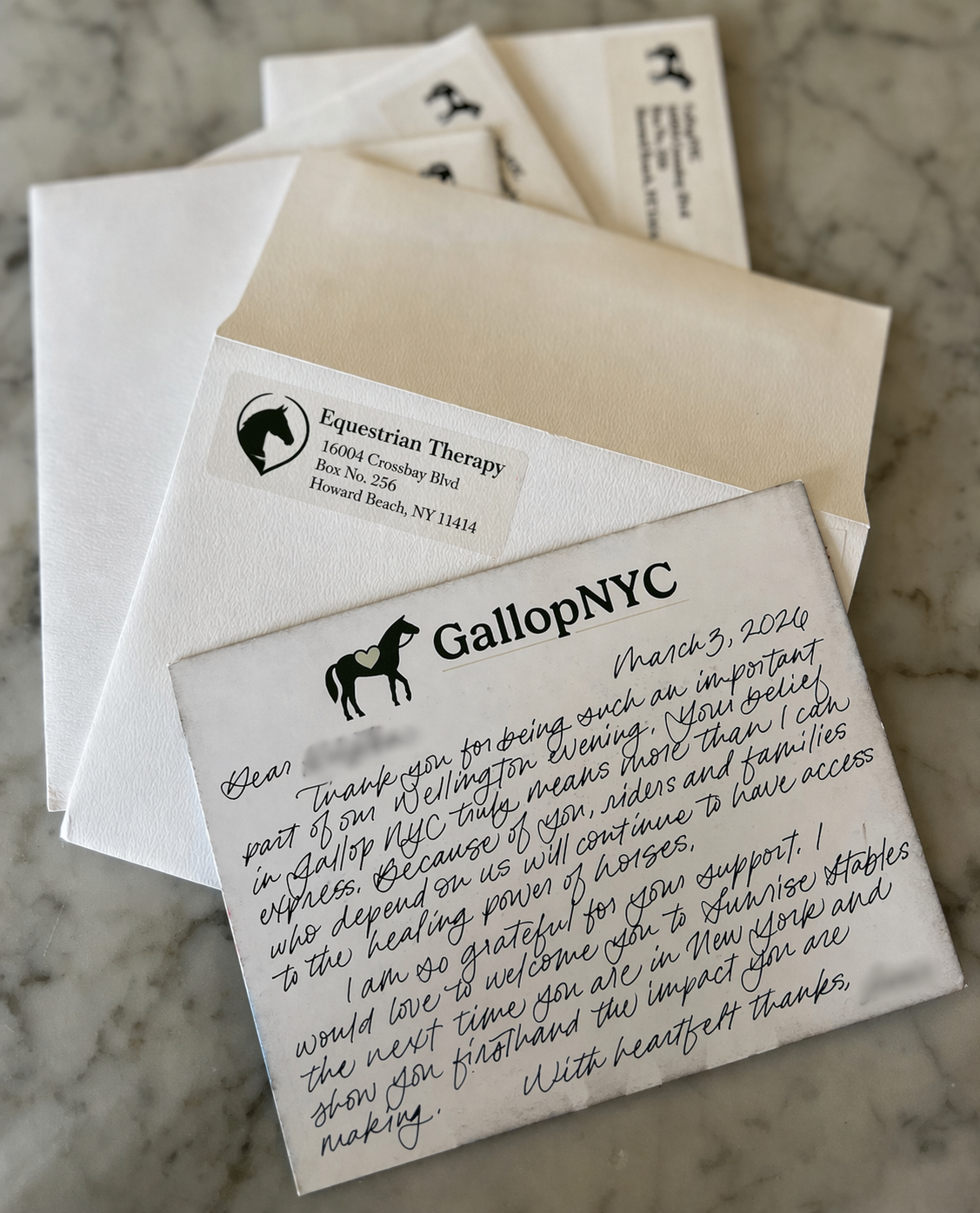
The day after the gala, your Executive Director, Development Director, and even a few Board Members should begin calling the people who made the evening possible.
Not emailing, calling.
Let them hear your voice and allow yourself to listen to theirs.
Call your honorees. Your major sponsors. Your underwriting donors. Your top table captains.
Keep it brief and thank them. Then, listen. Ask if they enjoyed the evening. Ask what stood out. Ask what could be better. It may seem scary to call people, but don’t be afraid. I promise you it will be inspiring. Most people have really positive things to say. You will learn from the calls and hear things you did not expect. We always do.
The conversation is important here, as you want to understand the nuances of your success. Only a conversation will help you hear what would otherwise be left unsaid.
Fundraising works best when it feels like a relationship, and this is relationship work.

Old School Phone Conversations
Have your team send thoughtful, personal follow-up emails to anyone who still owes on a pledge or commitment. Better yet, have the team pick up the phone as well. Even just leaving a message is great.
Not boilerplate invoices or automated reminders.
Be warm, be gracious, and be thoughtful.
If someone made a meaningful commitment to your gala, they deserve meaningful follow-ups as well, not just a cold email notification.
Survey the Crowd
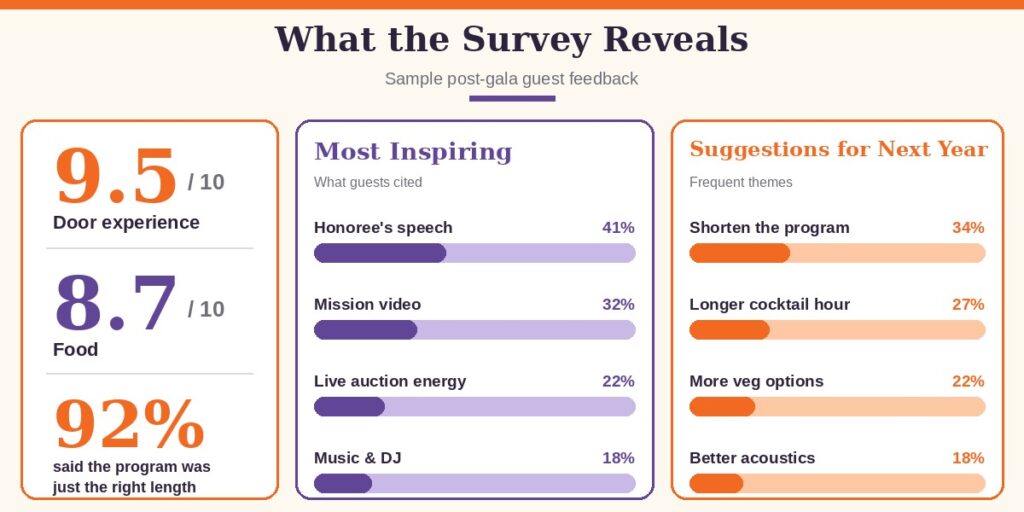
Within the first week, while the memories are still fresh, send a short survey to attendees using SurveyMonkey or Google Survey. Keep it simple, with only a handful of questions.
On a scale of one to ten:
How was their experience at the door?
How was the food?
Was the program too long, too short, or just right?
Ask what most inspired them.
Ask for suggestions for next year.
Anything that helps you understand what worked and what can be improved from an attendee’s perspective, rather than the staff’s, will be valuable.
Make the Ask to the Honoree That No One Thinks to Make
The ask can be difficult, but it is the backbone of one of our favorite post-gala moves; one far too few organizations use:
Within two weeks of the event, ask your honorees whether they would consider serving as a Dinner Chair for next year’s gala. Chances are, they are still feeling the love and warmth of the evening. Ask now, while the feeling is still fresh in their memory.
For the honoree, they get visibility, recognition, and top billing. Again.
For your organization, you get the guarantee that they will once again invite their network to support the organization.
Study The Numbers
The first week is reserved for thanking your guests, hearing their input, and collecting outstanding gifts.
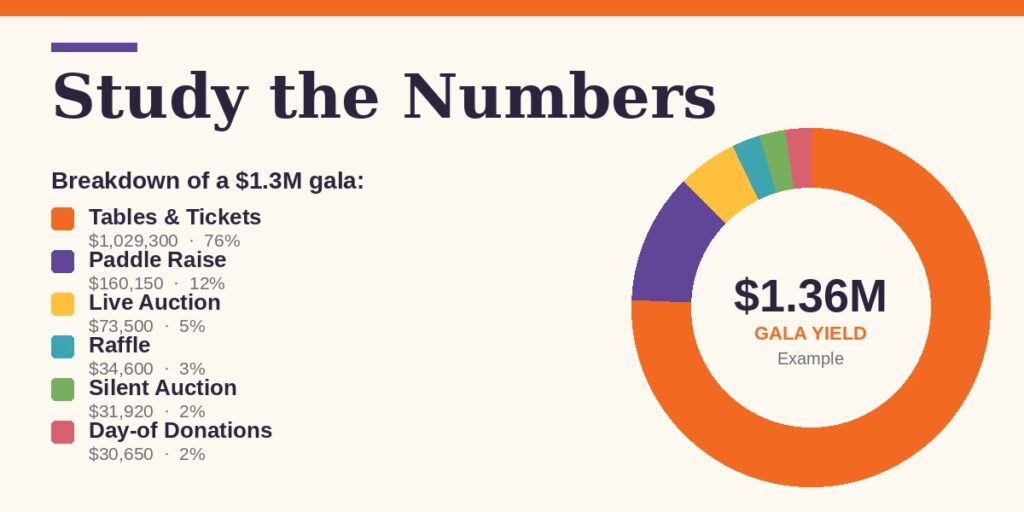
The second week is when you open up the numbers. Not to admire the gross revenue. Too many nonprofits stop at:
“We raised more than last year.”
That is only an analysis on the basic level.
High-performing organizations treat every gala like a data set. Study the numbers to understand the income breakdown by category.
Projecting Future Gala Income & Milestones
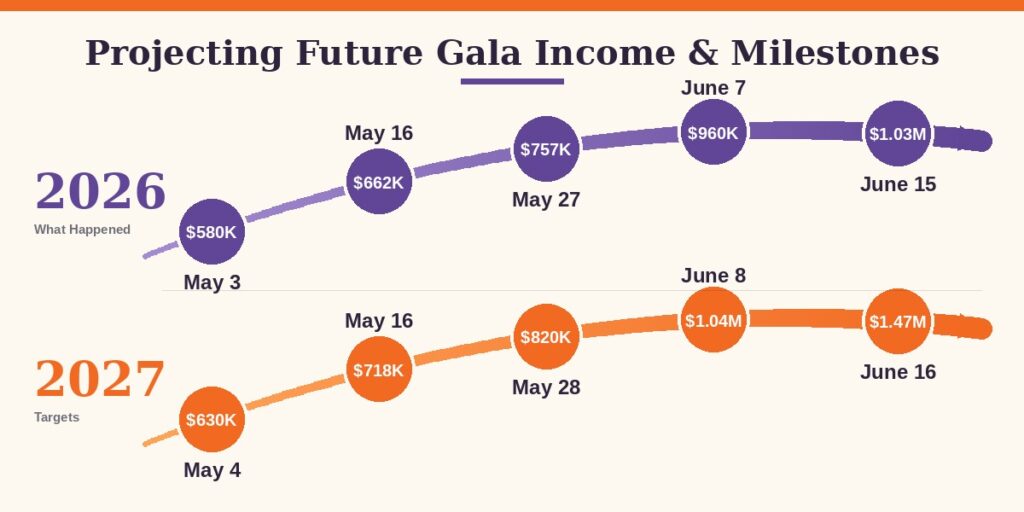
Look at how much came in by what specific date. This data informs benchmark dates and the projection of next year’s income goal.
If you know what is supposed to come in by what date, you have a way to understand when you are falling short. Critical information for making course corrections to recover.
Luck is not a strategy. Data can help you move beyond the “Close your eyes and pray for a thousand points of light.”
Choose Next Year’s Honorees Carefully
By week three, the Board should already be discussing next year’s honorees.
This is where strategy matters over sentimentality.
At Growth for Good, we have a simple rule:
Cash, not cachet.
Prestige is good, but it shouldn’t outweigh fundraising ability. When approaching prospective honorees, be candid: this is an honor, yes, but it is also a partnership.
A gala honoree is central to the fundraising strategy. The best honorees don’t just have a lot of superlatives or flashy titles. They have networks and social capital. They agree in advance to sell tables and attract sponsors. They are comfortable making introductions and asking for support.
Plainly sharing with a prospective honoree what’s expected of them. You only want those who want the responsibilities and agree to tap their network.
At the same time, begin building your host committee.
Past supporters. Friends of Board Members. People who know how to fill a room.
Because no matter how beautiful your invitation may be, people still attend events because someone they know asked them to come along. You need a lot of askers!
Choose the Venue Early
By month two, your venue should be secured.
The best venues go early, and you want all the options available when it comes time to pick.
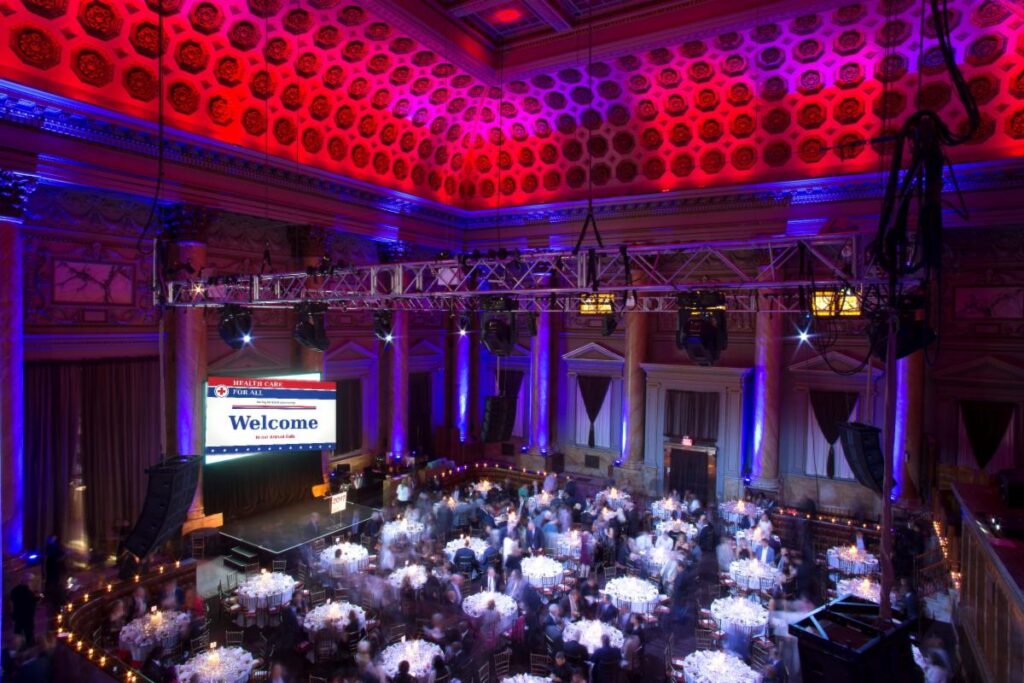
Venues matter. A stunning room with poor sightlines, awkward registration flow, cramped cocktail space, or bad acoustics can create an awkward social Feng Shui that can quietly depress fundraising all night long.
Choose somewhere that’s not just beautiful to look at, but wonderful to be in too.
Start on Your Timeline
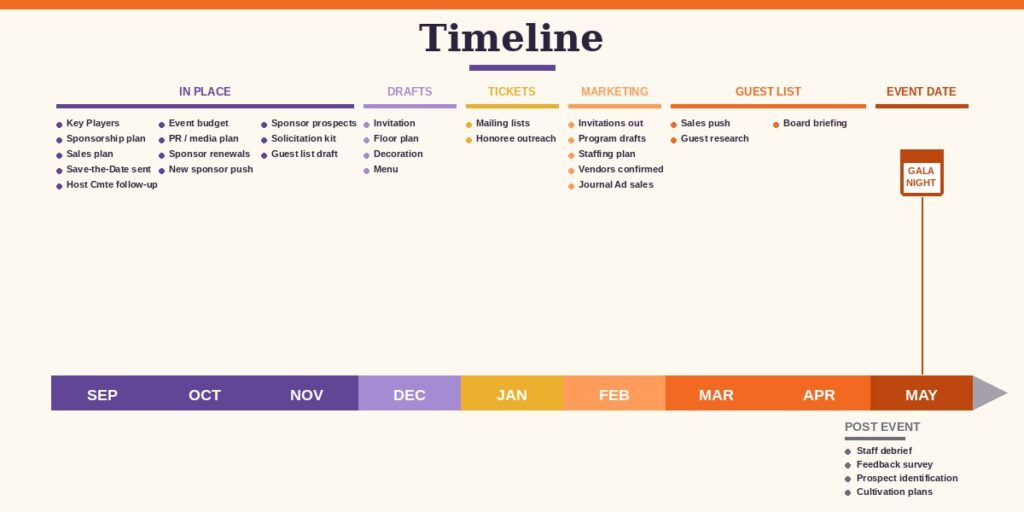
Once the venue is secured, create the gala plan.
Be intentional from the beginning and build your timeline.
Work backward from event date and map every major milestone:
- When honorees must be secured.
- When host committee recruitment begins.
- When sponsorship renewal and outreach launches.
- When save-the-dates go out.
- When the invitations mail.
- When auction procurement starts.
- When seating closes.
- When production meetings begin.
Put it in writing, assign owners, and set deadlines early. The more time you have with a solid plan, the more polished it will be when executed. Click HERE for Growth for Good’s Post Event Check-List from “The Event is Over – Now What” Blog.
The Real Secret
People often assume that the nonprofits with the strongest galas have bigger budgets, better committees, or more glamorous supporters. Sometimes that’s true, but often they simply start earlier.
They understand that gala success is built in the quiet weeks after the ballroom clears. The earlier you move, the better your results.
All that said, remember to celebrate your successful event. Sleep for a weekend. Take the team to lunch.
Just don’t let the end of the night feel like the end of the work.
When the gala is over, the real fundraising has just begun.
Stay Tuned for Our Next Two Gala Blogs – Engaging Your Board for Gala Success and Auctions, Cash Calls, Raffles, eJournals, and Other Gala Income